Daniel Fridljand
AI Engineer
TNG Technology Consulting
Biography

Daniel Fridljand
AI Engineer
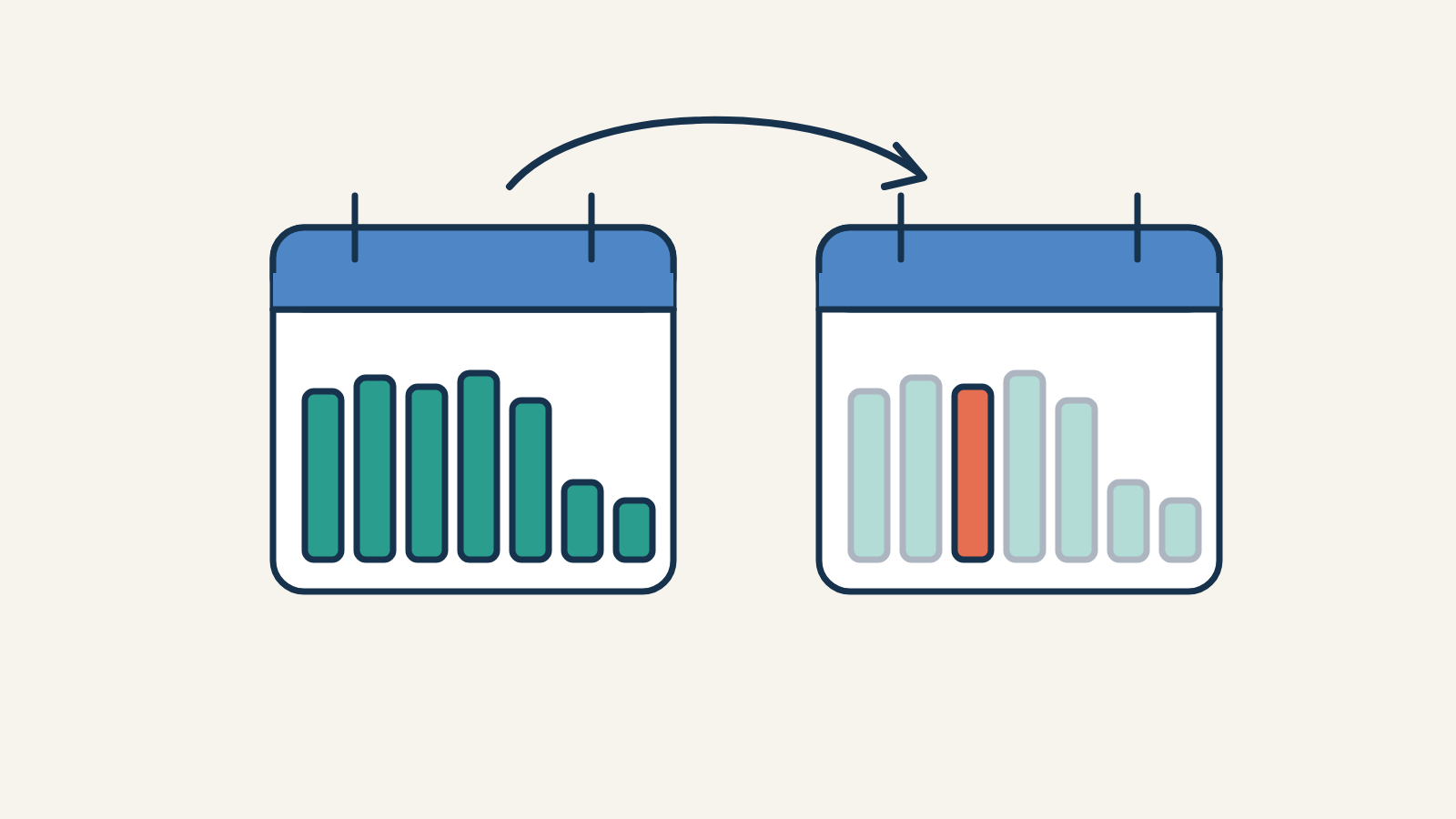
I build AI systems that make it to production, including an LLM-based customer-support automation I took from discovery to live rollout as sole AI engineer. My mathematics background shapes how I measure: at a manufacturer, simple comparisons blamed extra scrap on a production line, but once I compared runs of the same recipe, the difference disappeared.
Download my resuméInterests
- Applied AI
- Machine Learning
- Software Development
Education
- M.Sc. in Mathematics, 2023 — University of Heidelberg
- Exchange Scholar in Applied Mathematics, 2023 — Yale University
- B.Sc. in Mathematics, 2020 — University of Heidelberg
Recent posts




Experience

AI Engineer - Software Consultant
TNG Technology ConsultingMunich, Germany
- Industrial Process Intelligence (Aug 2026 – present): Sole engineer on a scrap-rate prediction proof of concept for an industrial manufacturer. Benchmarked ~40 model and feature combinations under time-ordered cross-validation; order attributes fixed at booking predicted scrap as well as the full sensor set, making raw-material batch tracking the top data request to the client, ahead of new sensors.
- Retail Cashier-Fraud Detection (Jul – Aug 2026): Scaled unsupervised point-of-sale anomaly scoring from a 7-store sample to a retail client's full estate by moving aggregation into SQL Server (~29.8M receipts to ~203K cashier-day rows), ranking cashiers comparably to the incumbent rule system without per-customer rule configuration.
- Sandboxed Agent Platform (Jun 2026 – present): One of three developers on a self-hosted platform (Tauri/React, Rust) that lets non-technical colleagues run agentic workflows on sensitive local files. It cleared a 15-person adversarial red team, unlocking expansion from a 10-user pilot to a full department.
- Document Validation and Email-to-Order Parsing (Apr – Jun 2026): Co-developed an LLM offer-review service on Kubernetes that inserts review comments directly into uploaded .docx offers, and designed an email-to-order pipeline (FastAPI, Streamlit review) with multimodal attachment handling.
- Customer Support Automation (Dec 2025 – Apr 2026, live in production): Sole AI engineer from discovery to live rollout at a SaaS company (architecture). Fixed code paths cover the >80% of tickets with a known intent and an agent takes the long tail, on Temporal workflows that pause for staff sign-off, so nothing reaches a customer without approval: 811 tickets in its first three months at 86.6% reviewer approval, with daily volume up ~5x after an internal CEO showcase. Migrated the persistence layer under live load, bringing reviewer requests back under 2 minutes.
Platform Engineer - Software Consultant
TNG Technology ConsultingMunich, Germany
- Contributed to modernizing a supply-chain application from Java 8 to 17 and JBoss to WildFly, and migrated an internal virus-scanning service from SOAP to REST with Keycloak authentication.
- Deployed a JFrog Artifactory proxy in 3 days after it had been scoped as a multi-month migration, cutting a recurring CI step from 8 hours to 30 seconds and saving each developer ~1–2 hours a week.
- Built the CVE dashboards (OWASP scans in Jenkins, Prometheus, Grafana) that lead developers used to show modernization progress to management.
- Became the team's reference point for AI tooling: ran a coding-assistant workshop for 20 colleagues and wrote three editions of TNG's firm-wide AI Tool of the Week, which led to my move into AI engineering.

Research Data Analyst - Computational Oncology
ETH ZürichBasel, Switzerland
- Extended a Bayesian non-parametric model (Hierarchical Dirichlet Process) with phylogenetic tree structure in R, so each subclone's signature distribution is drawn from its parent's.
- Applied it to whole-exome data from 187 cells across 10 melanoma tumors in the Tumor Profiler Study, identifying eight latent mutational signatures.
- Showed that reference signatures derived from bulk sequencing do not transfer to sparse single-cell data without informative priors.

Research Data Analyst - Environmental Epidemiology
Stanford University School of MedicinePalo Alto, USA
- Led the statistical analysis as co-first author of a Nature Medicine paper (2024), cited 76 times: over half the Black–White age-adjusted mortality gap in the US is attributable to air pollution. Wrote the initial manuscript and led the revise-and-resubmit.
- Engineered a reproducible pipeline harmonizing 63M+ death records with satellite pollution estimates and census demographics across 3,000+ US counties and 27 years (1990–2016).
- Built and open-sourced an R Shiny application that lets readers explore the published estimates without writing code.

Exchange Scholar
Yale UniversityNew Haven, USA
- Selected as one of two university-wide representatives from Heidelberg for the year-long exchange; DAAD stipend.
- Grade: Honors (full marks).
- Coursework: Deep Learning, Geometric & Topological Methods in Machine Learning (Prof. Smita Krishnaswamy), Differentiable Manifolds, Statistical Methods in Human Genetics.

Research Data Analyst - Statistical Genomics (Master's Thesis)
European Molecular Biology LaboratoryHeidelberg, Germany
- Implemented and evaluated IHW-Forest, Nikolaos Ignatiadis's extension of hypothesis weighting from one covariate to many using random forests: on ~16 billion genetic association tests it made more discoveries than the original method wherever both ran.
- Wrote the core splitting and weighting logic in C++ via Rcpp.
- Presented in seminars at Yale and UNC Chapel Hill and in a competitively selected talk at DAGStat 2022; peer-reviewed for Bioinformatics Advances and Cell Biology.

M.Sc. in Mathematics
University of HeidelbergHeidelberg, Germany
- Grade: 1.0 (full marks).
- Master's thesis: 'Better multiple Testing: Using multivariate co-data for hypothesis weighting', conducted at EMBL.
- Awards: Gerhard C. Starck Foundation Stipend, Baden-Württemberg Stipend.

Exchange Student
Hebrew University of JerusalemJerusalem, Israel
- Graduate-level coursework in Functional Analysis, Algebraic Combinatorics, and Quantitative Models at the Einstein Institute of Mathematics.
B.Sc. in Mathematics
University of HeidelbergHeidelberg, Germany
- Grade: 1.4 (top 10% of cohort).
- Bachelor's thesis: 'Online estimation of the geometric median in a Hilbert space'.
Publication
Disparities in air pollution attributable mortality in the US population by race/ethnicity and sociodemographic factors
Pascal Geldsetzer, Daniel Fridljand, Mathew Kiang, Eran Bendavid, Sam Heft-Neal, Marshall Burke, Alexander H. Thieme, Tarik Benmarhnia
Nature Medicine · July 1, 2024
In the US between 2000 and 2011, over half of the gap in mortality between Black and non-Hispanic White adults can be explained by the fact that Black adults are, on average, more exposed and more susceptible to air pollution than non-Hispanic White adults.